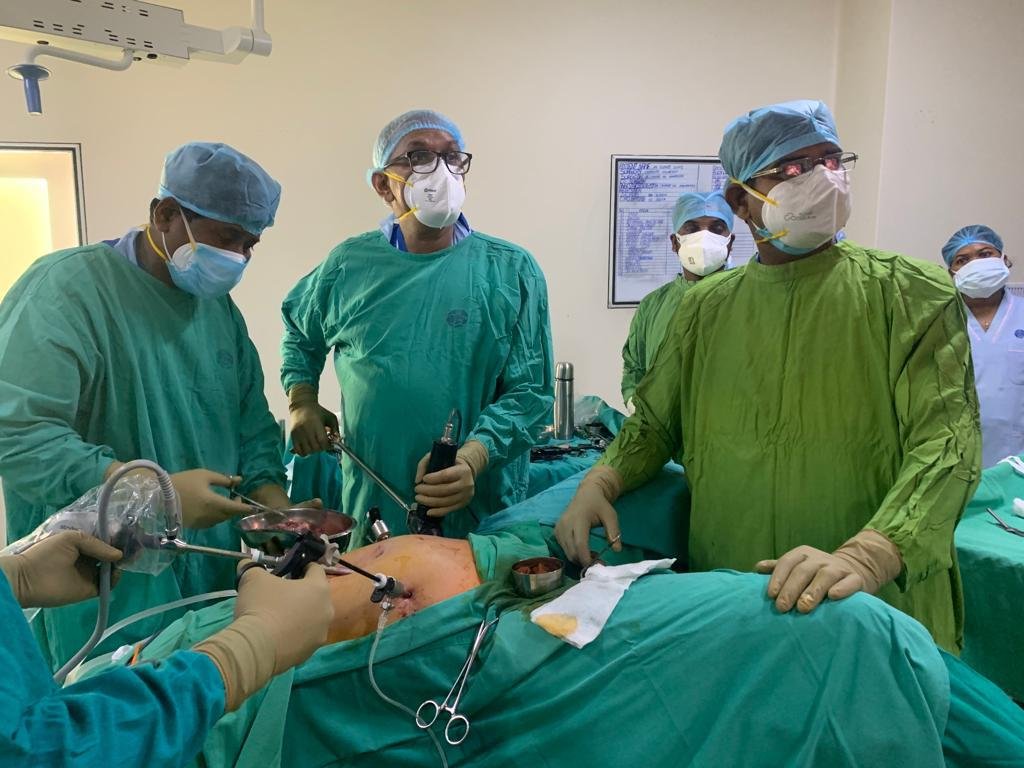
Advancements in surgical technology have revolutionized women’s healthcare over the past few decades. Gone are the days when gynaecological surgeries required large abdominal incisions, prolonged hospital stays, and weeks of painful bed rest.
Today, gynaecological laparoscopic surgery (also known as keyhole or minimally invasive surgery) allows women to undergo complex surgical procedures with minimal pain, tiny scars, and a swift return to daily life.
If you or a loved one are considering laparoscopic surgery in Kolkata, this comprehensive guide covers everything you need to know—from treated conditions and procedure comparisons to recovery timelines and cost factors.

1. What is Gynaecological Laparoscopy?
Gynaecological laparoscopy is a minimally invasive surgical procedure that allows a surgeon to view, diagnose, and treat conditions inside the pelvic and abdominal cavity without making large cuts in the skin.
During the procedure:
 A tiny incision (usually 5 to 10 mm) is made near the navel (belly button).
- A laparoscope—a thin tube fitted with a high-definition camera and light source—is inserted to project clear, magnified images of the uterus, ovaries, fallopian tubes, and surrounding organs onto a video monitor.
- Carbon dioxide (CO_2) gas is introduced into the abdomen to create space and give the surgeon a clear view.
- If treatment is needed, 2 or 3 additional tiny keyhole incisions (5 mm) are made near the lower abdomen to insert specialized micro-instruments.
2. Which Conditions Can Be Treated?
Laparoscopy can be used for both diagnostic purposes (finding the root cause of pelvic pain or infertility) and therapeutic/operative procedures.
Common gynaecological conditions treated via laparoscopy include:
- Uterine Fibroids (Laparoscopic Myomectomy): Removal of fibroids while preserving the uterus for future pregnancies.
- Adenomyosis (Laparoscopic Adenomyomectomy): Removal of focal adenomyotic masses or adenomyomas to relieve severe pain and heavy bleeding.
- Endometriosis: Excision or ablation of deep infiltrating endometriosis implants and scar tissue.
- Ovarian Cysts (Laparoscopic Cystectomy): Safe removal of ovarian cysts (dermoid cysts, endometriomas, chocolate cysts) while saving healthy ovarian tissue.
- Ectopic Pregnancy: Emergency removal of a pregnancy growing outside the uterus (usually in the fallopian tube).
- Infertility Management: Evaluation of fallopian tube patency (chromopertubation), release of pelvic adhesions, and treatment of polycystic ovaries (laparoscopic ovarian drilling).
- Hysterectomy (Total Laparoscopic Hysterectomy – TLH): Complete removal of the uterus for heavy menstrual bleeding, fibroids, or severe prolapse.
- Uterine Prolapse (Laparoscopic Sacrocolpopexy / Pectopexy): Pelvic floor reconstruction for prolapsed organs.
3. Laparoscopy vs. Open Surgery
| Feature |
Open Surgery (Laparotomy) |
Laparoscopic Surgery (Keyhole) |
| Incision Size |
One large incision, usually around 10–15 cm |
2–4 small incisions, usually around 0.5–1 cm each |
| Post-operative Pain |
Moderate to severe |
Minimal to mild |
| Hospital Stay |
Usually 3–7 days |
Often day-care or 1–2 days |
| Blood Loss |
Generally higher |
Generally minimal |
| Scarring |
Prominent, longer scar |
Small, less noticeable scars |
| Recovery Time |
Approximately 4–6 weeks |
Approximately 1–2 weeks |
| Risk of Infection |
Generally higher |
Generally lower |
4. 2D vs. 3D Laparoscopy
As surgical technology has evolved, visualization systems have transitioned from traditional 2D to advanced 3D laparoscopy.
- 2D Laparoscopy: Provides high-definition flat images on a screen. While highly effective, it lacks real depth perception, requiring the surgeon to estimate depth based on visual cues.
- 3D Laparoscopy: Uses dual-camera lenses and specialized glasses (similar to 3D cinema), giving the surgeon true spatial visual depth perception.
Advantages of 3D Laparoscopy:
- Superior precision during complex suturing (e.g., closing the myoma bed after adenomyomectomy or myomectomy).
- Better visualization during intricate nerve-sparing dissections (such as ureterolysis or rectal mobilization in severe endometriosis).
- Reduced operative time and increased patient safety.

5. Benefits and Limitations
Key Benefits:
- Cosmetic appeal: Tiny incisions leave minimal scarring.
- Faster healing: Patients walk within hours and return home quickly.
- Reduced infection risk: Internal organs are not exposed to open air.
- Fewer adhesions: Less tissue trauma means a lower likelihood of post-surgical scar tissue formation inside the pelvis.
Limitations:
- Requires highly specialized surgical skills and advanced equipment.
- May not be suitable for extremely large pelvic masses or severe multi-organ cancers requiring extensive open clearance.
- High reliance on general anesthesia.
6. Preoperative Investigations
Before undergoing laparoscopic surgery, routine medical evaluations are performed to ensure maximum safety:
- Routine Blood Tests: Complete blood count (CBC), blood group, kidney/liver function tests, viral markers, and coagulation profile.
- Imaging: High-resolution Pelvic Ultrasound (USG) or MRI of the pelvis to accurately map fibroids, adenomyomas, or endometriosis.
- Cardiopulmonary Clearance: Chest X-ray, Electrocardiogram (ECG), and an echocardiogram (if necessary).
- Pre-Anesthetic Check-up (PAC): Evaluation by the anesthesiologist to confirm fitness for general anesthesia.
7. Recovery and Return to Work
One of the biggest advantages of laparoscopic surgery is the fast recovery timeline.
- Day of Surgery: You will be encouraged to sit up and walk a few hours after waking from anesthesia to prevent deep vein thrombosis (DVT).
- Day 1–2: Most patients are discharged within 24 to 48 hours once bowel sounds return and pain is well-controlled with oral medications.
- First Week: Light household activities, gentle walking, and soft foods are advised.
- Return to Work: Office workers can generally resume remote or desk work within 7 to 10 days.
- Full Recovery: Heavy lifting, strenuous exercise, and sexual intercourse should be avoided for 4 to 6 weeks, depending on whether a hysterectomy or major uterine reconstruction was performed.
8. Risks and Complications
Laparoscopy is considered very safe, but as with any surgical procedure, minor and major risks exist:
Common / Minor Side Effects:
- Shoulder tip pain (caused by residual CO_2 gas irritating the diaphragm; resolves in 24–48 hours).
- Mild bruising or soreness around keyhole sites.
- Mild vaginal spotting.
Rare Complications:
- Bleeding or hematoma formation at incision sites.
- Injury to surrounding structures (bladder, bowel, blood vessels, or ureters), especially in cases with dense adhesions or severe endometriosis.
- Reaction to general anesthesia.
Choosing an experienced laparoscopic surgeon significantly minimizes these risks.
9. Cost Factors in Kolkata
The total cost of gynaecological laparoscopic surgery in Kolkata varies based on several factors:
- Complexity of Procedure: A basic diagnostic laparoscopy costs less than a complex 3D laparoscopic total hysterectomy or deep infiltrating endometriosis surgery.
- Hospital Selection: Tier-1 super-specialty hospitals vs. day-care surgical centers.
- Room Category: Standard general ward, semi-private, private, or deluxe suite.
- Technology Used: Advanced 3D laparoscopic systems or harmonic scalpels may carry additional equipment fees.
- Surgeon Expertise & Hospital Stay Duration: Experienced surgical teams and length of stay impact final billing.
- Insurance Coverage: Most health insurance policies in India fully cover medically necessary laparoscopic gynaecological surgeries.
10. When Laparoscopy May Not Be Appropriate
While laparoscopy is preferred for most women, open surgery (laparotomy) or alternative management may be recommended if:
- The uterus or mass is excessively large (e.g., massive fibroids reaching up to the ribcage).
- Severe medical co-morbidities exist where high intra-abdominal gas pressure poses severe cardiac or respiratory risks.
- Advanced, widely metastasized gynaecological cancers require extensive open debulking.
- Multiple prior open abdominal surgeries have created extreme, impassable scar tissue.
11. Frequently Asked Questions (FAQs)
Q1. Is laparoscopic surgery painful?
Post-operative pain is far less severe than open surgery. Most patients experience mild discomfort or soreness, which is easily managed with mild pain relievers for a few days.
Q2. Will I have visible scars after keyhole surgery?
Incision marks are tiny (0.5–1\text{ cm}) and usually hidden within the navel or lower bikini line. Over time, they fade into faint, barely noticeable lines.
Q3. Can I get pregnant after a laparoscopic myomectomy or adenomyomectomy?Yes. Laparoscopic surgery preserves the uterus while removing the disease. Once the myometrial layer heals completely (usually 3 to 6 months), pregnancy can be safely planned.
Q4. How long do I need to stay in the hospital?
Most patients are discharged within 24 to 48 hours following operative laparoscopy.
Conclusion
Gynaecological laparoscopic surgery has transformed women’s surgical care by replacing large surgical cuts with precision keyhole technology. Whether you require treatment for fibroids, ovarian cysts, adenomyosis, or endometriosis, consulting an expert laparoscopic gynaecologist ensures the safest outcomes, minimal pain, and a rapid recovery.